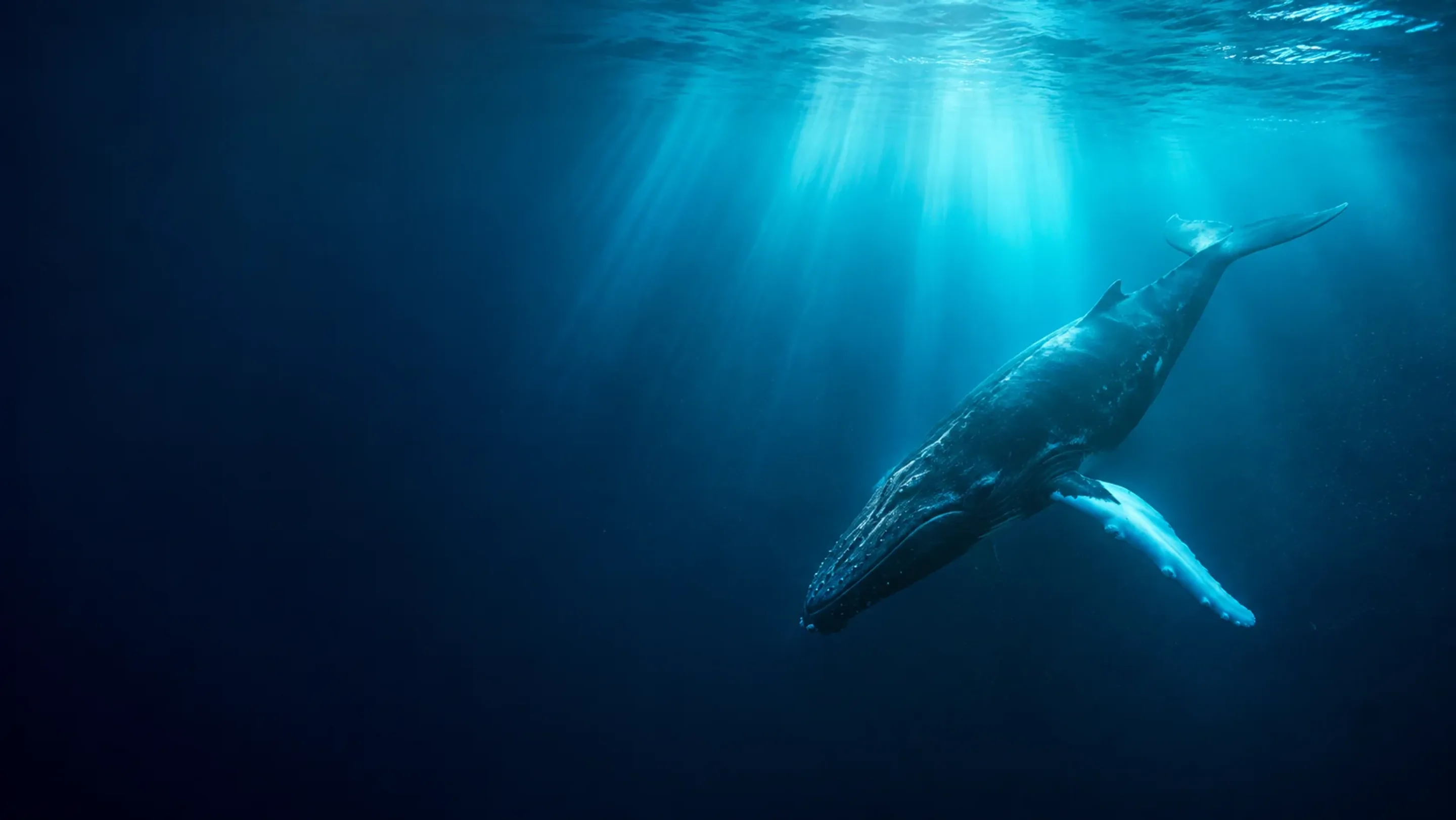
Hear the other side of the sea
A DEEPER WAY TO UNDERSTAND.
Past the noise on the surface,
one sound wave at a time, we learn the ocean again.
Underwater acoustics · Ocean monitoring · Environmental sensing
Ocean soundscapes01 / ∞
LISTENING TO THE BLUE
Giving the unknown a shape, slowly
Some worlds
only appear when you go quiet
The surface is scenery. Below it are the clues.
We start from sound and link underwater monitoring, environmental context and ocean storytelling, so every survey goes a little deeper.
The ocean isn't silent.
We just haven't started listening.
Different sounds tell you about a different ocean.
Pick a soundscape and start listening.
ACOUSTIC FIELD / ILLUSTRATION
01 / BIOPHONY
Echoes left by life
Following whale song and the sounds of marine life, we watch how animals meet, communicate and share the sea.
02 / GEOPHONY
The ocean's own rhythm
Look away from the surface and listen to waves, rain and currents to follow how the environment keeps changing.
03 / ANTHROPHONY
How close we are to the sea
We track the noise from shipping and offshore activity to rethink how human work and the marine environment meet.
Synthesized in your browser, not a field recording. Headphones and low volume recommended.
One survey,
from deployment to report
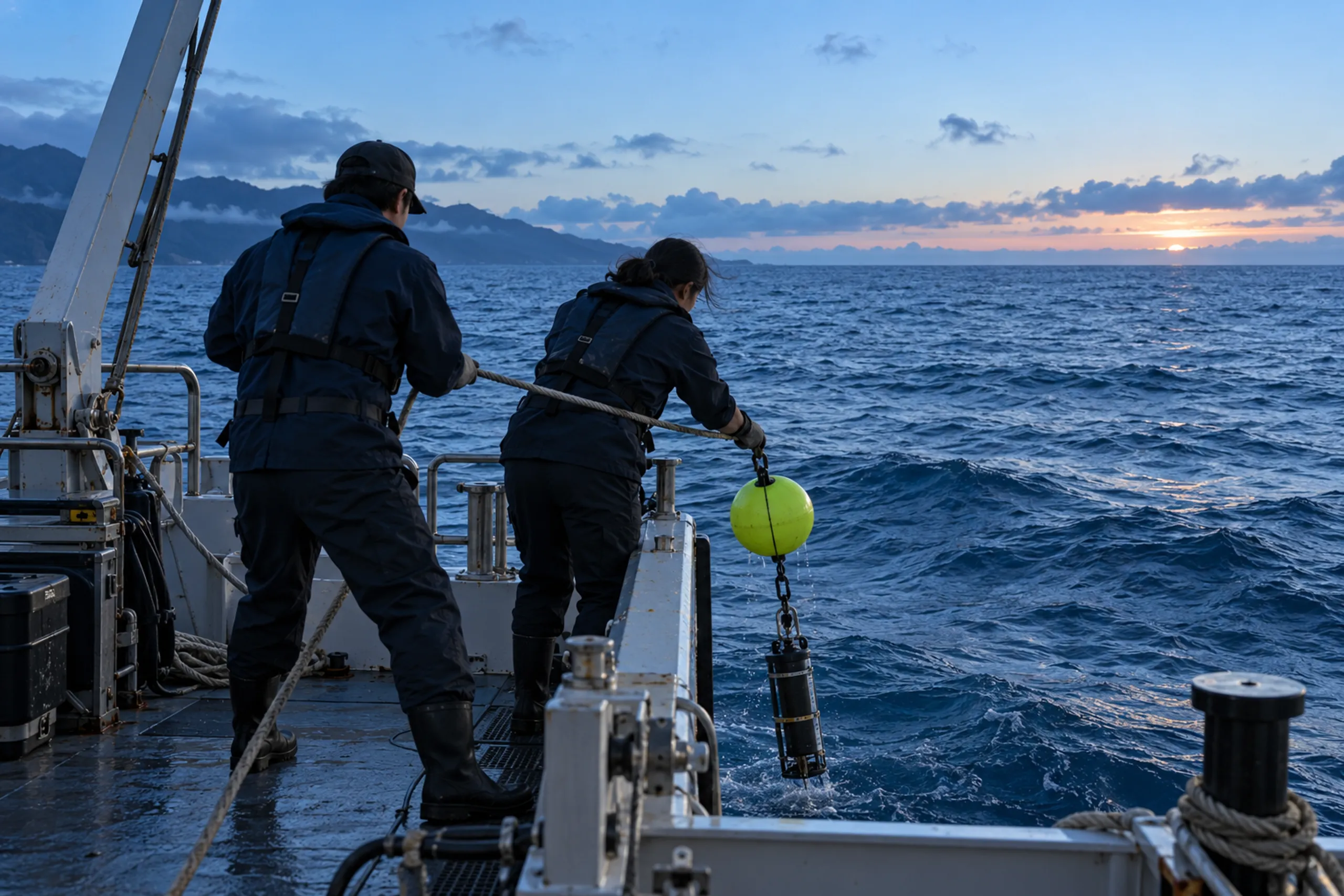
A hydrophone rides a mooring down to the planned depth,
records for about three months, then comes back up.
- Marker buoy Shows passing boats where the gear is
- Subsurface float Keeps the mooring line upright
- Recorder + hydrophone Records on a schedule for about 90 days
- Acoustic release Lets go of the anchor on a signal from the boat
- Anchor Holds everything on the seabed
- 01
Site and permits
We choose the area and depth for the research question, keep clear of shipping lanes and fishing grounds, and file the permits.
About 4–6 weeks
- 02
Deployment
The boat sets the buoy, recorder and anchor in place and logs position, depth and time.
1 day at sea
- 03
Recording
The recorder samples on a set schedule across day and night, tides and weather.
About 90 days
- 04
Recovery and labeling
The acoustic release brings the gear back, and we label every stretch of audio as biological, natural or human-made.
2–3 weeks
- 05
Soundscape report
We turn it into soundscape trends, frequency analysis and shareable clips that set up the next survey.
2–4 weeks
Every stretch of sea
has something worth understanding
From one question to one stretch of water,
we connect monitoring, research and storytelling.
01Underwater soundscapes
UNDERWATER LISTENING
Underwater recordings, organized into soundscapes, give us a starting point for any sea. From recording site to acoustic context, every clip can be traced back.
What we do Survey planning / Recording / Audio curation
02Ocean context
OCEAN CONTEXT
We read sound in its setting. Combining time, place and field notes, we map how a soundscape changes and leave a clear question for the next study.
What we do Background review / Change tracking / Research partnerships
03Sound to story
SOUND TO STORY
We turn a world few people see into stories they can feel, using sound curation and environmental storytelling to connect more people with the sea.
What we do Sound curation / Environmental education / Exhibitions
Before we define the ocean,
PELAGIC — A PRACTICE OF LISTENING
we practice hearing its language
05 / THE NEXT QUESTION
THE EXPLORATION CONTINUESLeave a question for this sea
A stretch of sea you want to understand, a sound you want to record, or a research question that isn't fully formed yet: any of them is a good place to start.
- Research groups Long-term monitoring and data curation
- Offshore engineering teams Underwater noise before and after construction
- Museums and educators Ocean sound exhibitions and teaching material
YOUR NEXT EXPLORATION