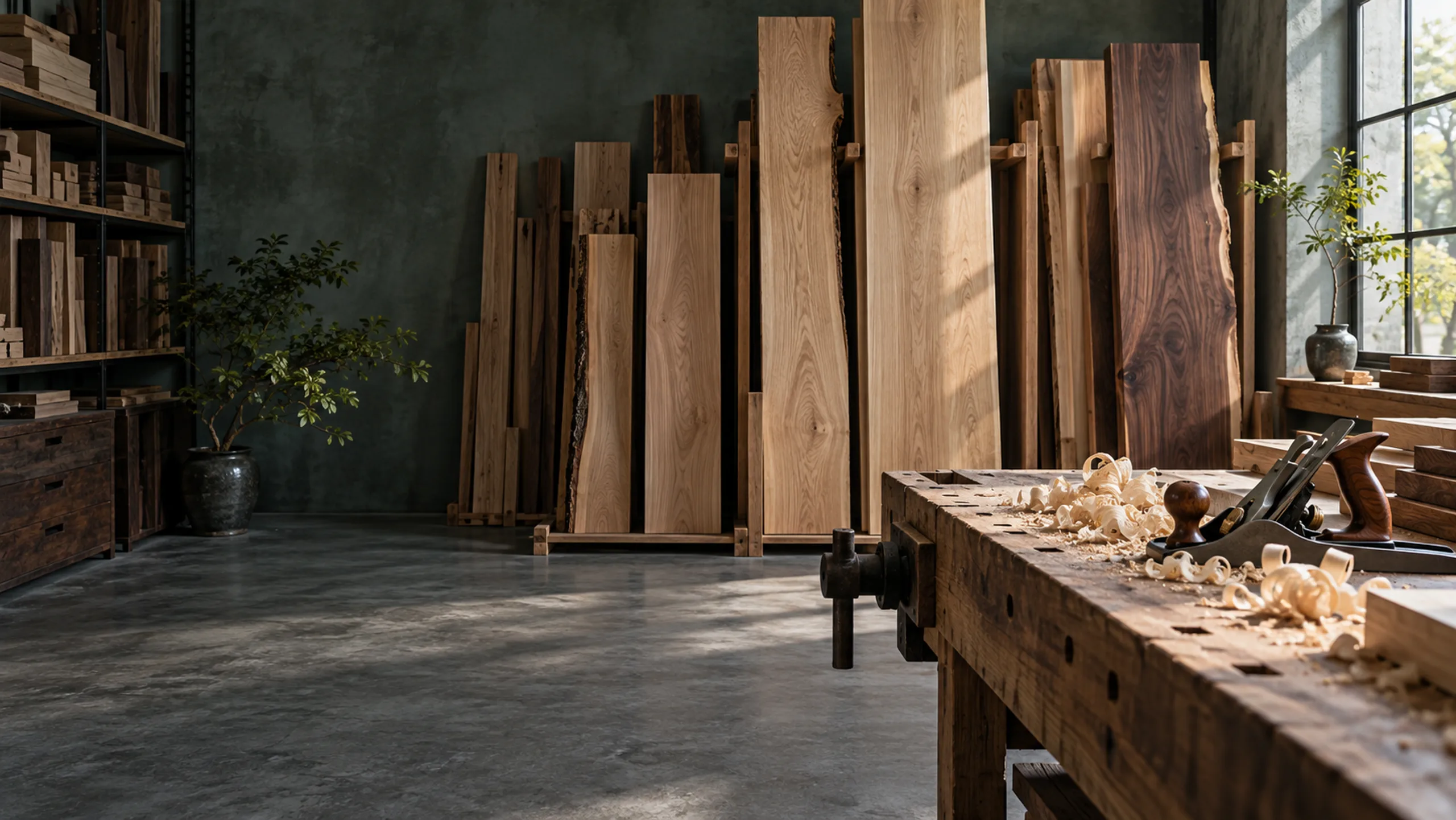
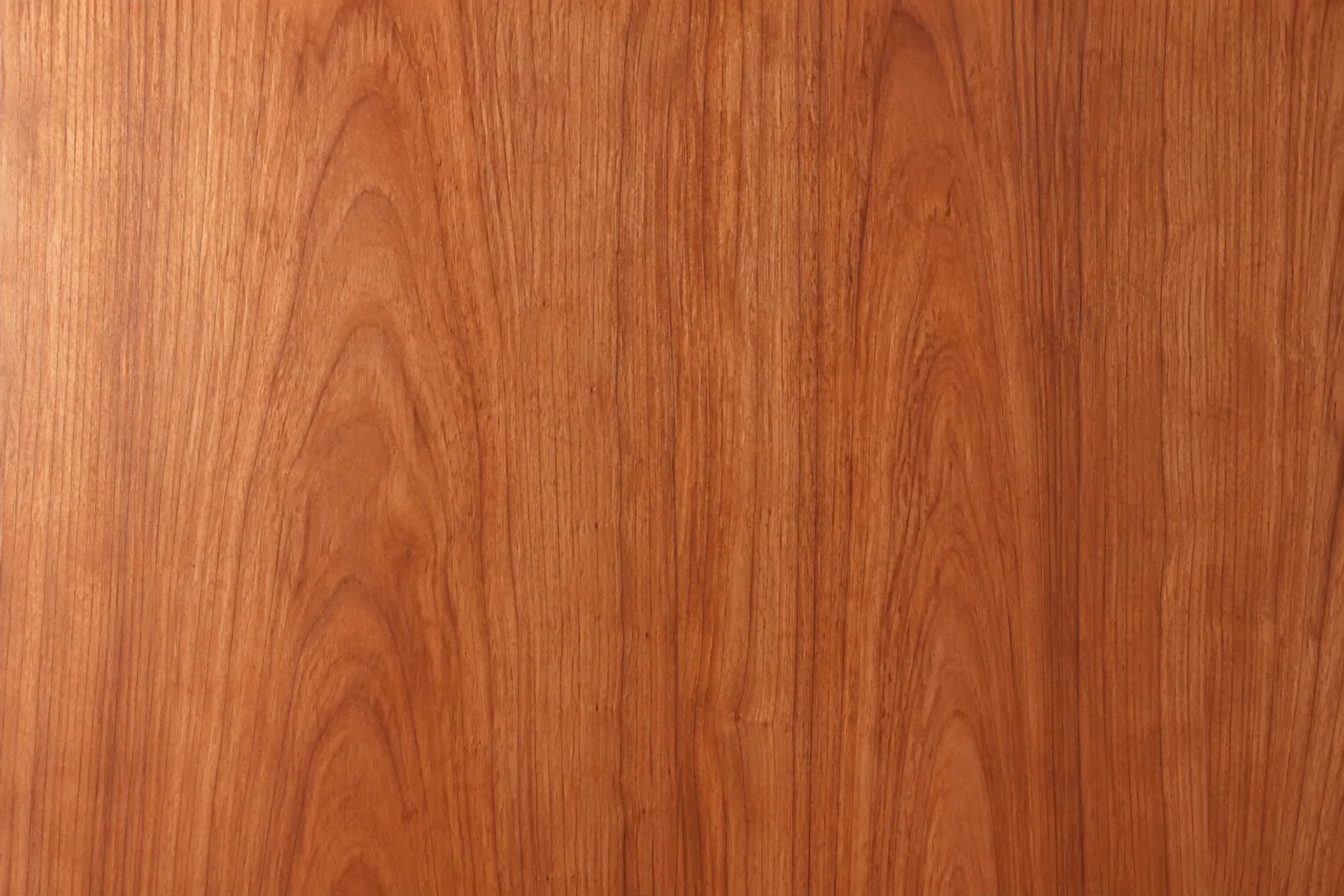
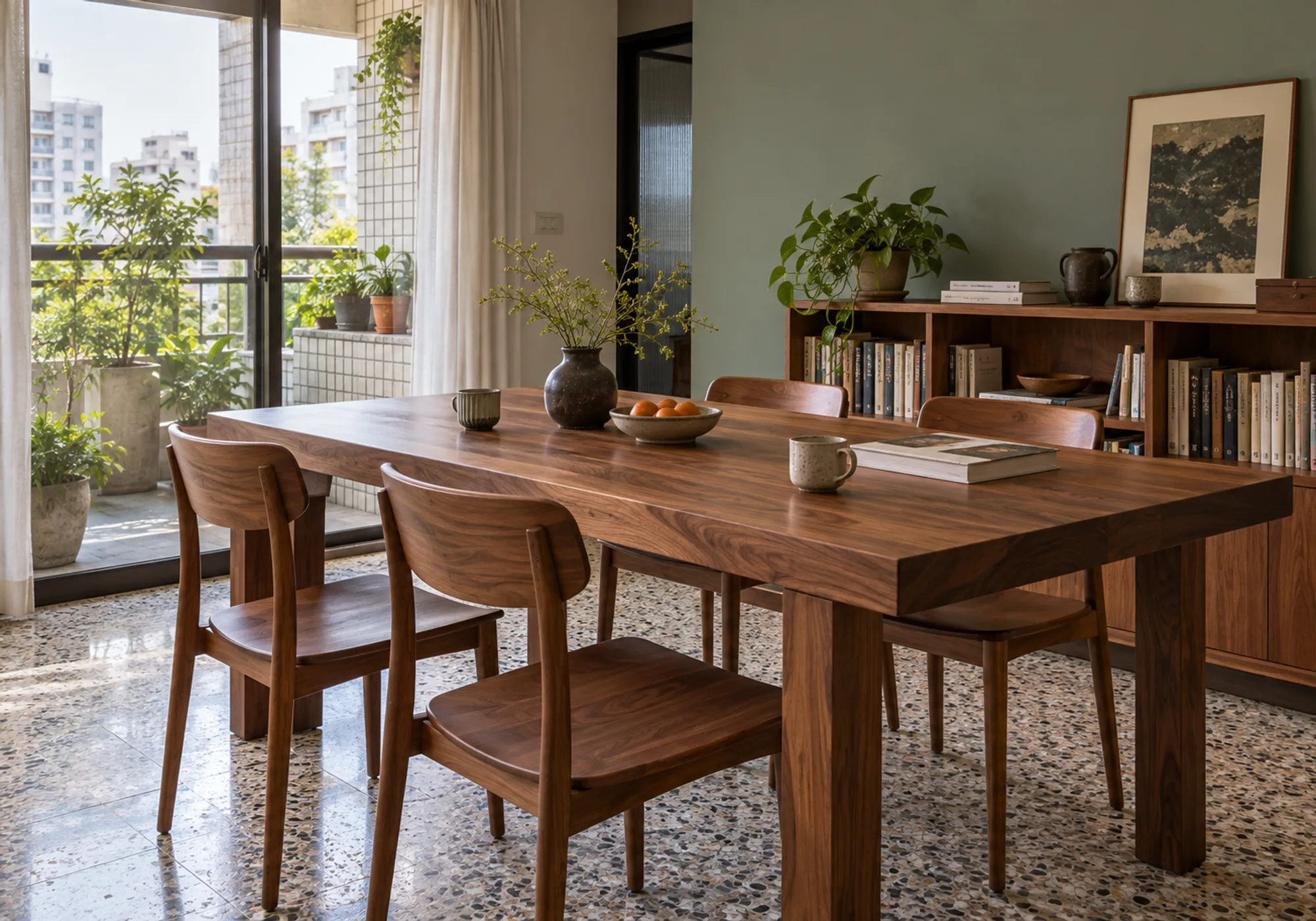
The same table feels different in each timber. Start with the grain, the surface and how the colour will age, then consider your space and budget.
0404
Timber selection · concept example
Four woods, different uses
Origins, density, hardness, thickness and colour below are illustrative, not timber specifications or purchasing advice. Each board needs an individual assessment.
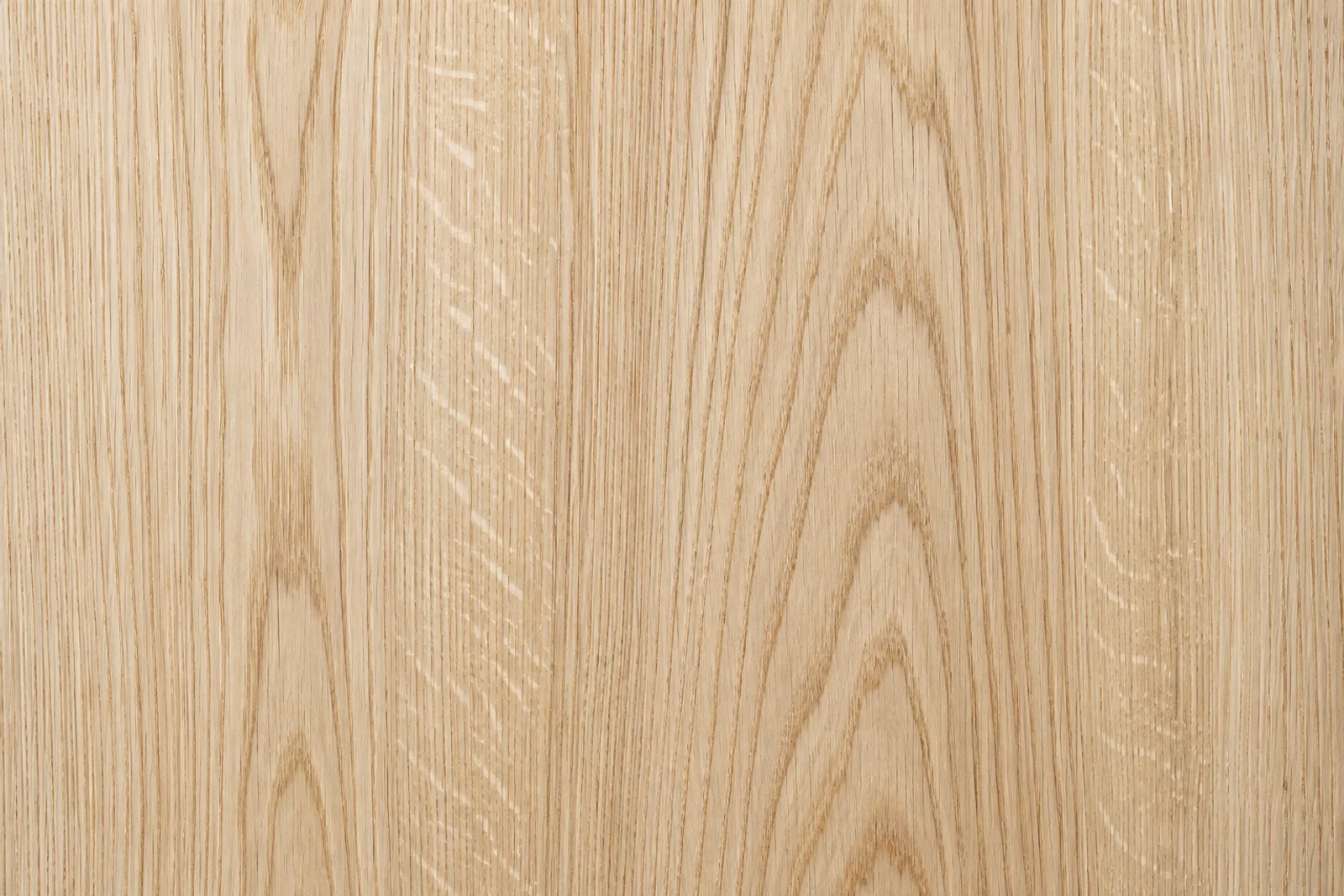
White oak
North America · example
Example air-dry density
0.750.75 g/cm³
Example stock thickness
25 / 40 mm (example)
Firm timber · open pores
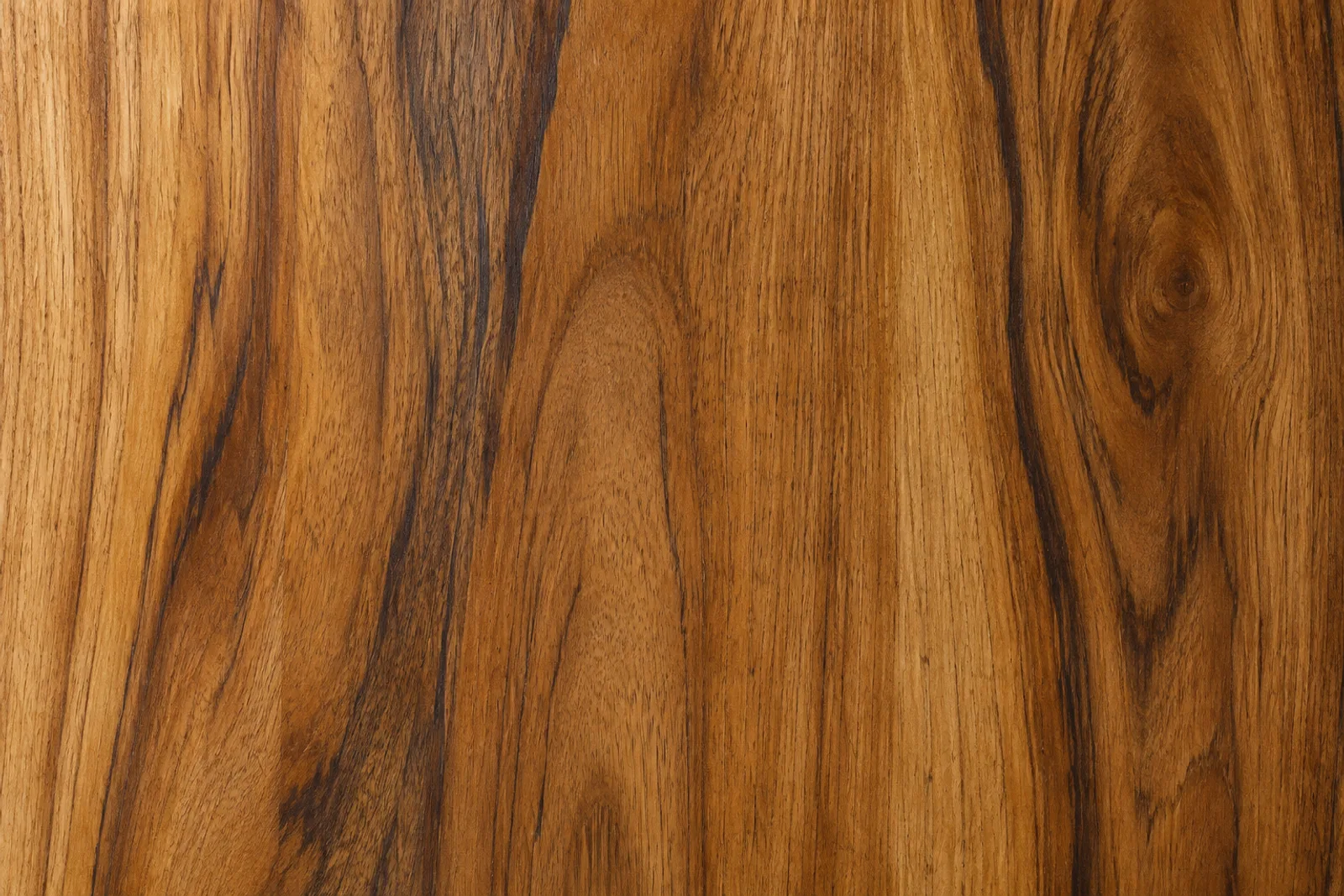
Pale tan with visible straight and cathedral grain. Oil deepens the colour; consider it for dining tops, chair legs and everyday seating.
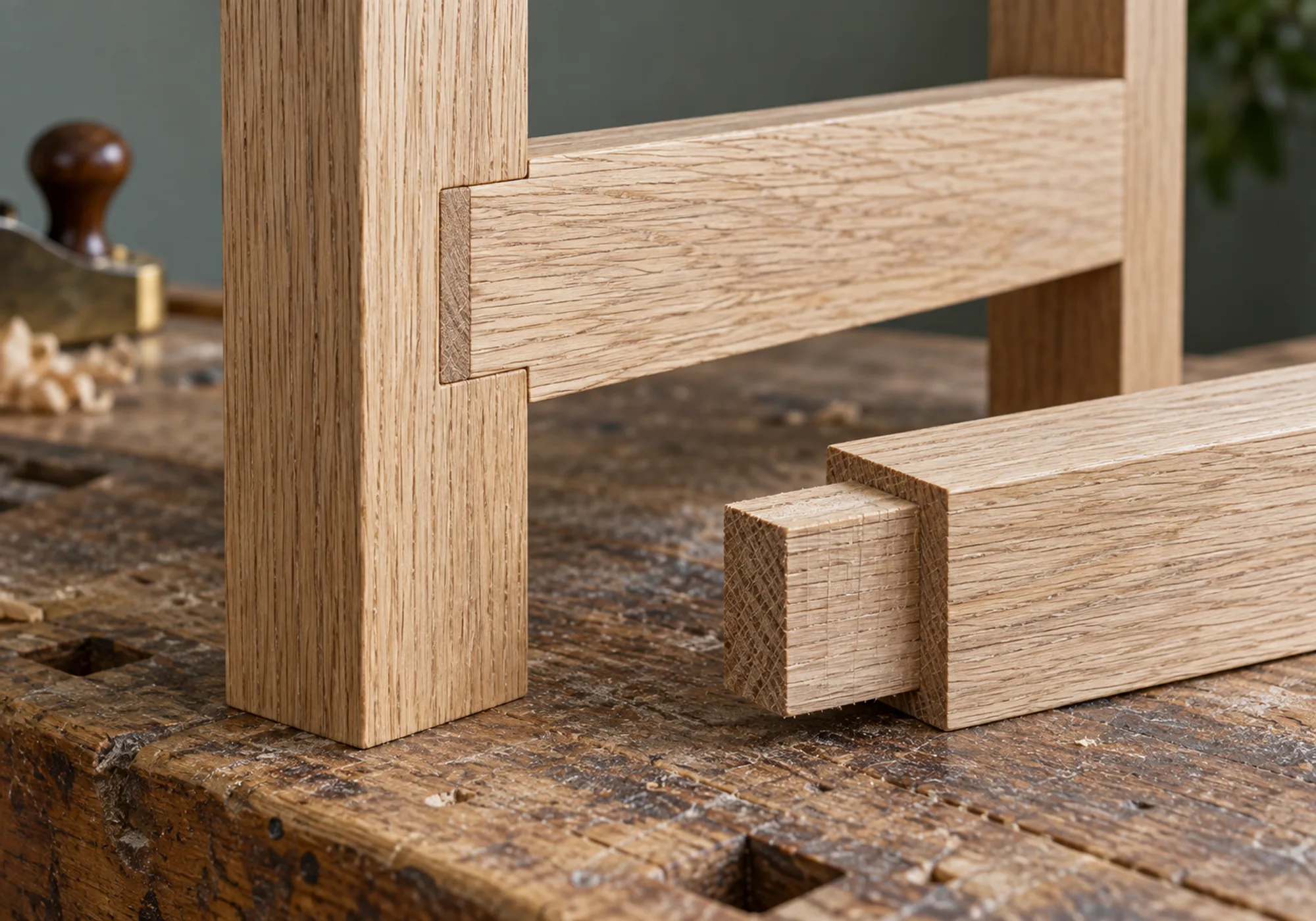
At MUJO, the direction of the fibres comes first. Legs need strength, a chair back needs a suitable grain path, and a top needs room for seasonal movement. Each board has a structural role.
Build with future repairs in mind
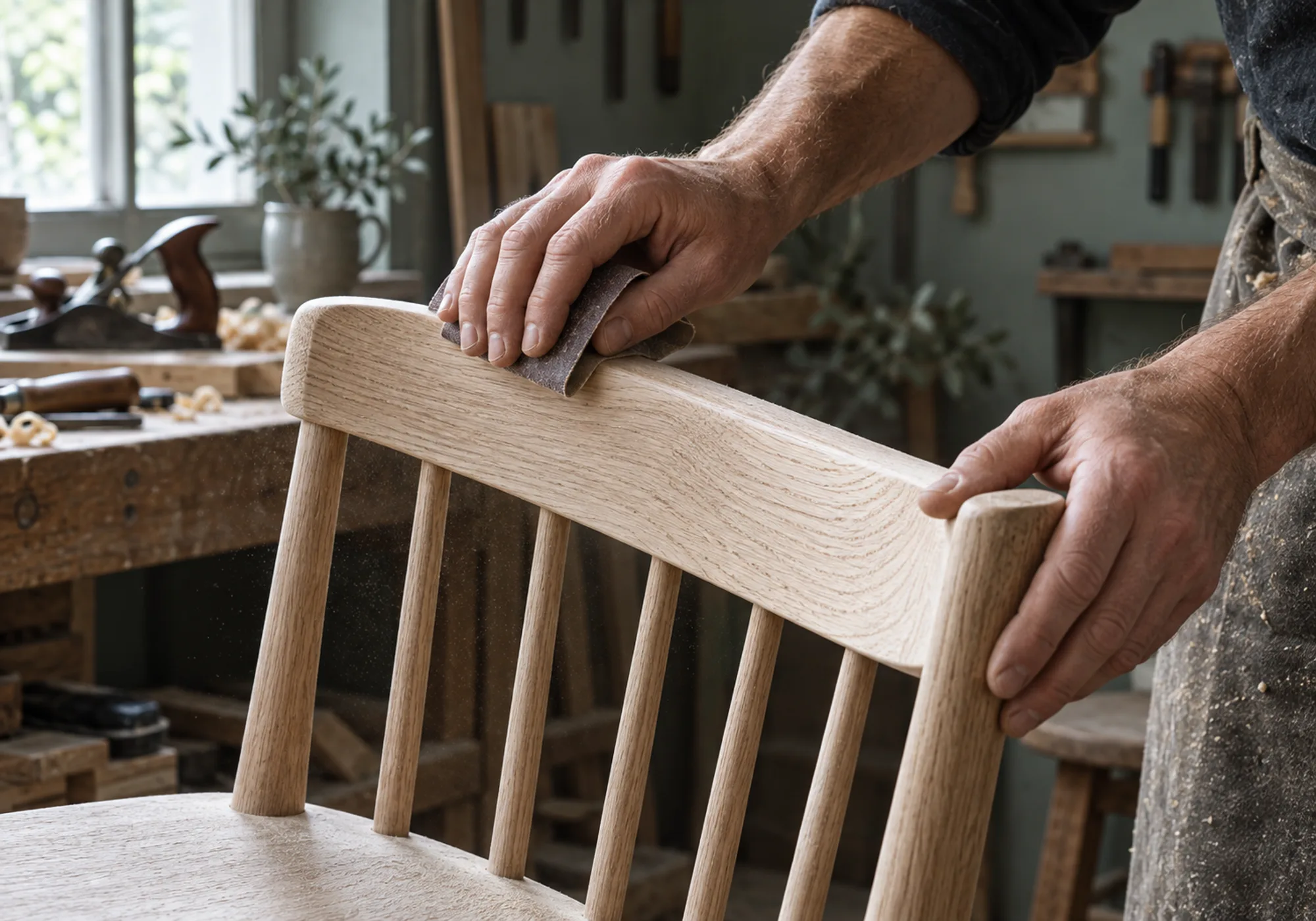
Check the load path before joining, then ease the edges, sand each surface and test the oil finish. Completion is a starting point: wear and loose joints can be assessed for later repair.
Height, posture, circulation and the room itself affect the backrest, seat depth and tabletop. Bring a photo of the space and tell us who will use it every day.
Check every surface you touch
Feel the curve of the chair back and the edges of the armrests and table. Leave room for natural movement, then review the appearance.
Illustrative stock note: 10–12% moisture / 14 days of indoor conditioning. These figures demonstrate the information shown; actual conditions depend on the environment, timber and component.
Everyday objects
Small pieces begin with the same care in selecting timber. Consider the edges you touch, the weight you lift and where the object will live.
Seating
Oak or walnut / 420 mm seat height (example)
Try a stool or chair before choosing the seat and timber. Review leg strength, seat depth and the weight when moving it.
Give someone the experience of making a piece together.
Choose, sand and take it home
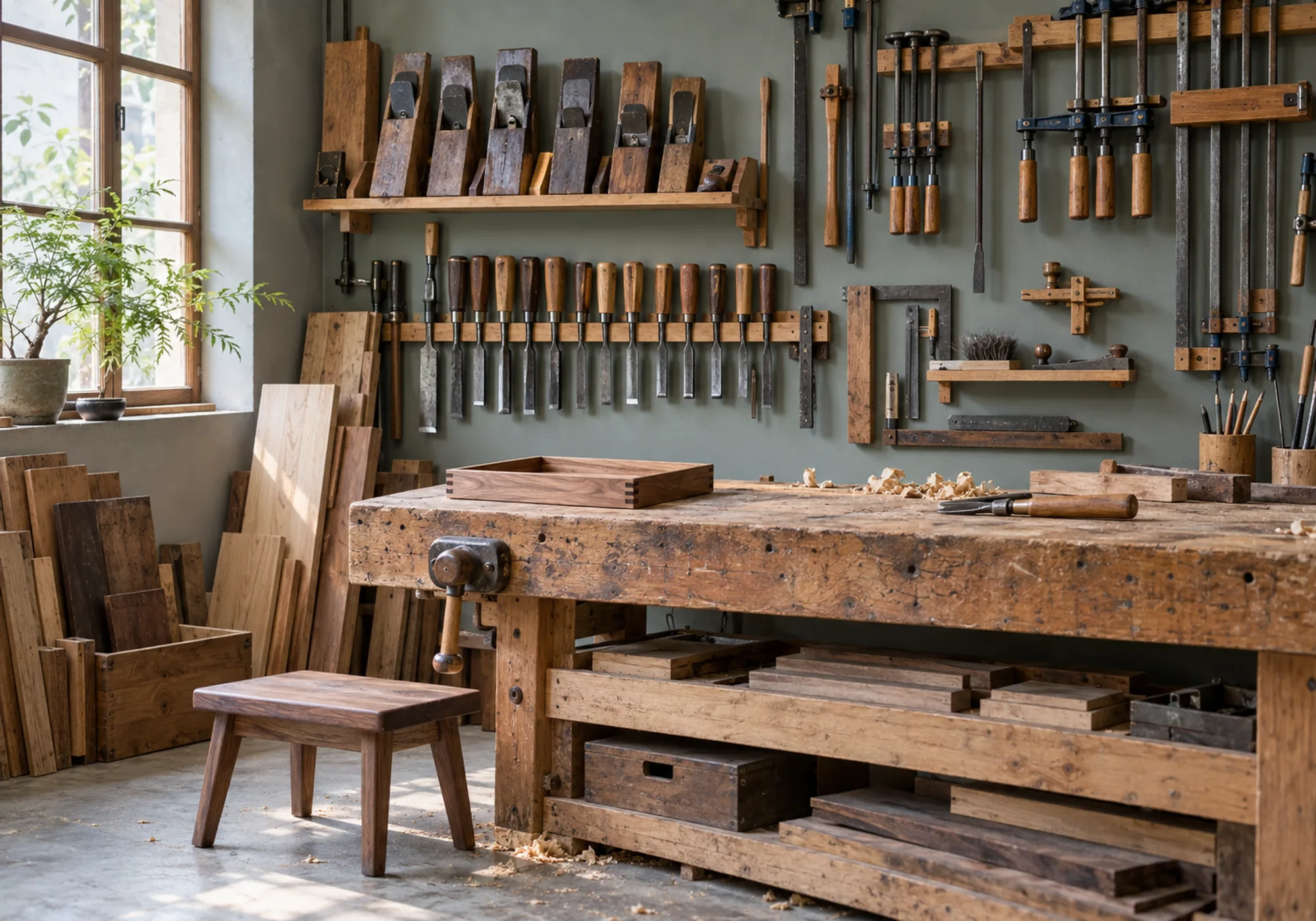
Explore the grain in prepared stock, practise easing and sanding, then finish a small wooden tray. Tool use is demonstrated and the session is adapted to the participants.
Assess looseness, cracks and joints, then determine whether the structure and timber can remain in use.
Surface care
Clean, remove wax or renew oil after a local test; refinishing need not erase every mark.
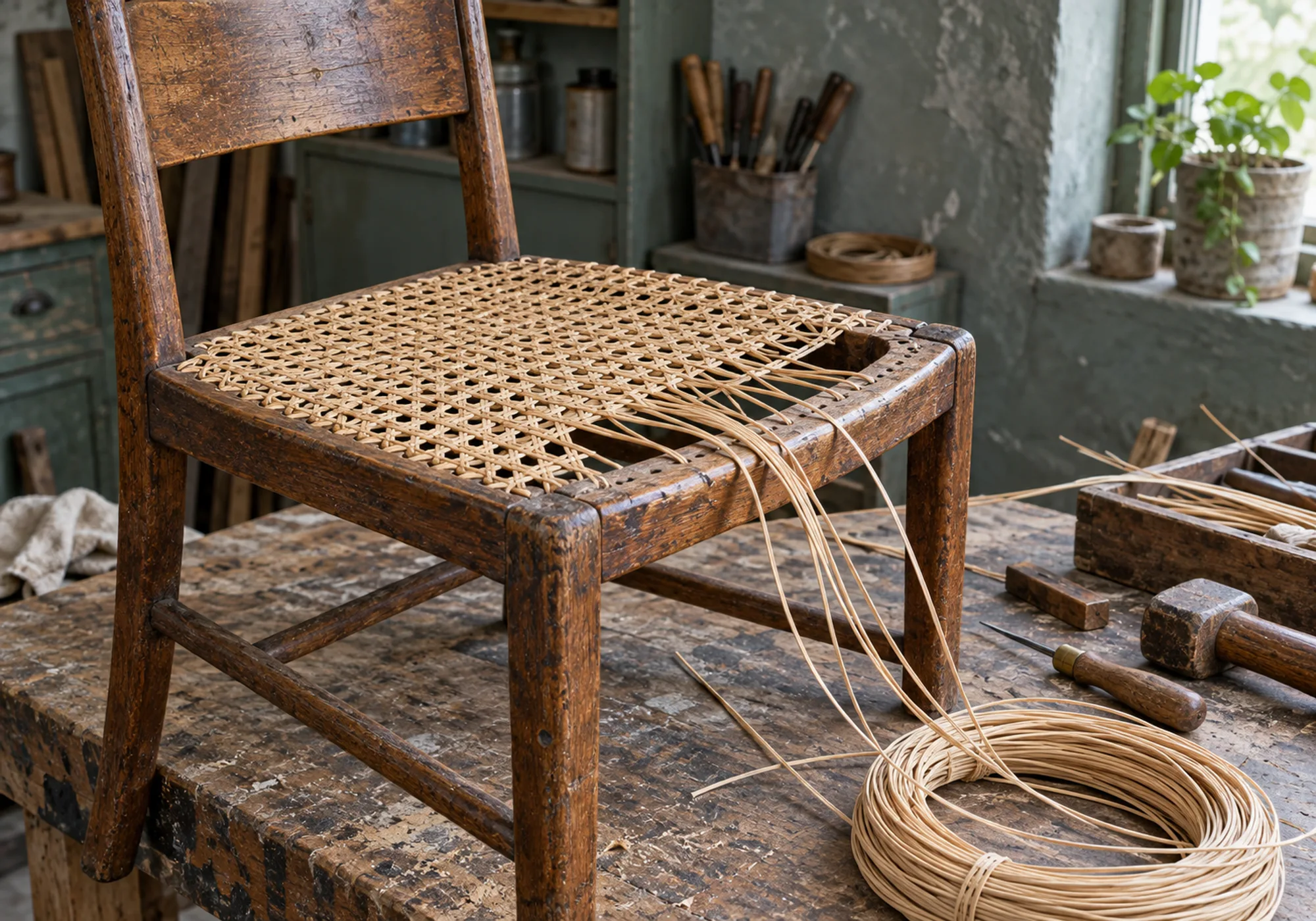
Seat reweaving
Review the original holes, materials and support for cane, paper cord or natural-fibre seating.
In-home assessment
Assess larger furniture and moving requirements using overall, underside and damage photos first.
When the furniture comes home
A fictional user story for this concept
Room for everyday life
“The chair sits quietly in the room, yet every time I sit down it feels like my own place.”
Lin Yu-an, interior designer (fictional character)
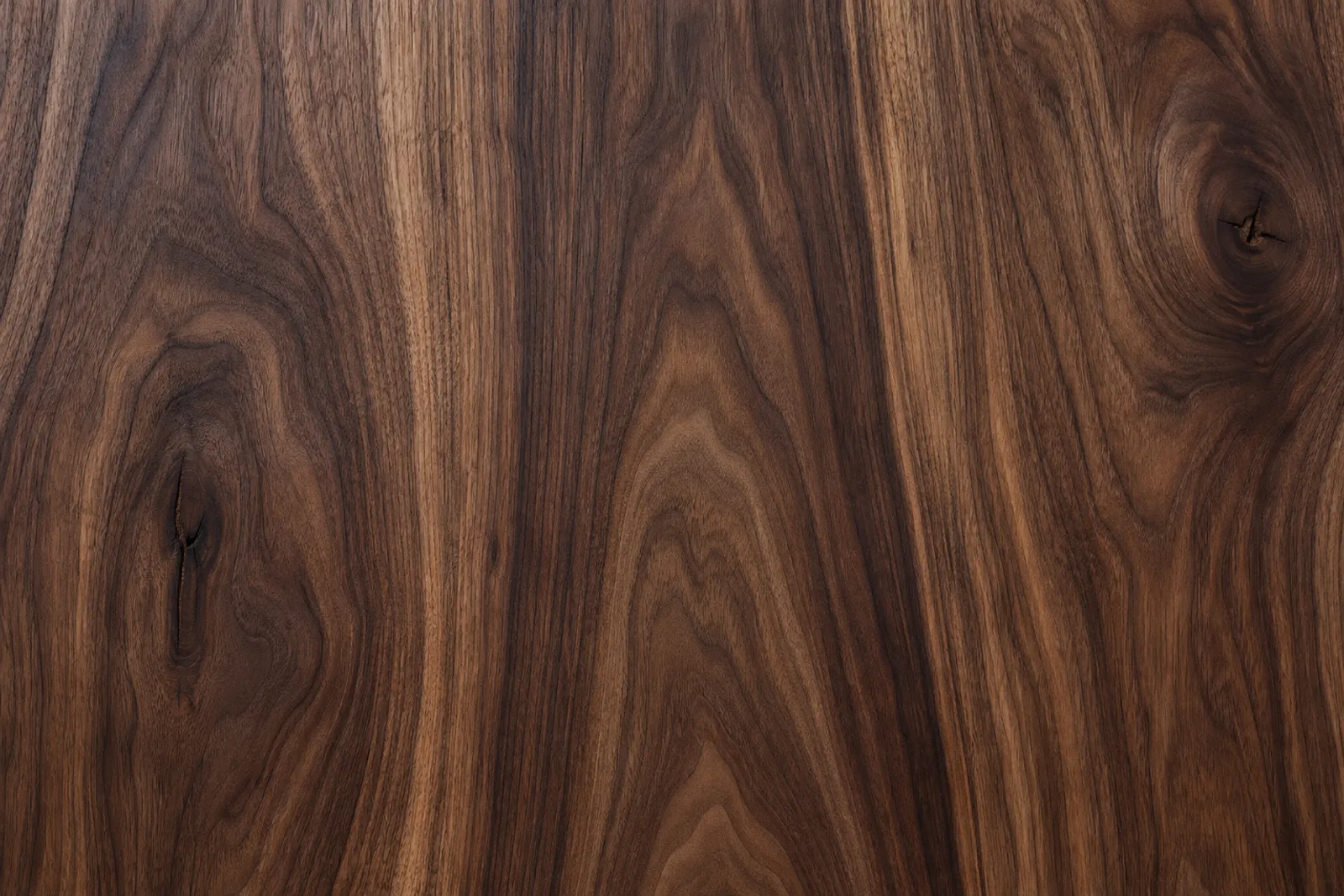
In this imagined home, the dining table also serves as a place to work. The brief begins with clearance behind the chairs, then explores continuous walnut grain and a top that suits both a laptop and dinner.
Start with back support, then compare seat depth and armrest position. Oak and walnut samples introduce material choices for the same design. A fictional exhibition.
Three sample notes on selecting timber, testing a chair and restoring furniture. A record of the decisions makes a custom brief easier to discuss.
2026.08.24 · concept example
The right board in the right place
Read the fibres for strength, then decide which face belongs where it will be touched.
Sample note: screen chair-leg stock for structural defects, follow the grain around a curved back, and consider the pattern and movement of a top. A single face-on photo cannot answer all of these questions.
2026.08.06 · concept example
What does a small change in a chair back feel like?
Try support, seat depth and posture together. The dimension in this sample title is illustrative.
Sample note: note where the back meets the chair in a natural sitting position, then test the seat depth and getting up. Proportion is a relationship between the seat and its user.
2026.07.19 · concept example
Keep the patina or refinish? Three checks first
Assess the structure, review the surface, then agree which marks should stay.
Sample note: establish joint safety, identify the existing finish and discuss which marks matter to the owner. Make a local test before agreeing to treat the whole piece.
Start with a timber brief
Bring photos, measurements or an idea still taking shape. Use this sample brief to explore a timber and a starting level of customisation.
Plan a visit
Taipei studio · by appointment Tuesday–Saturday, 10:00–18:00