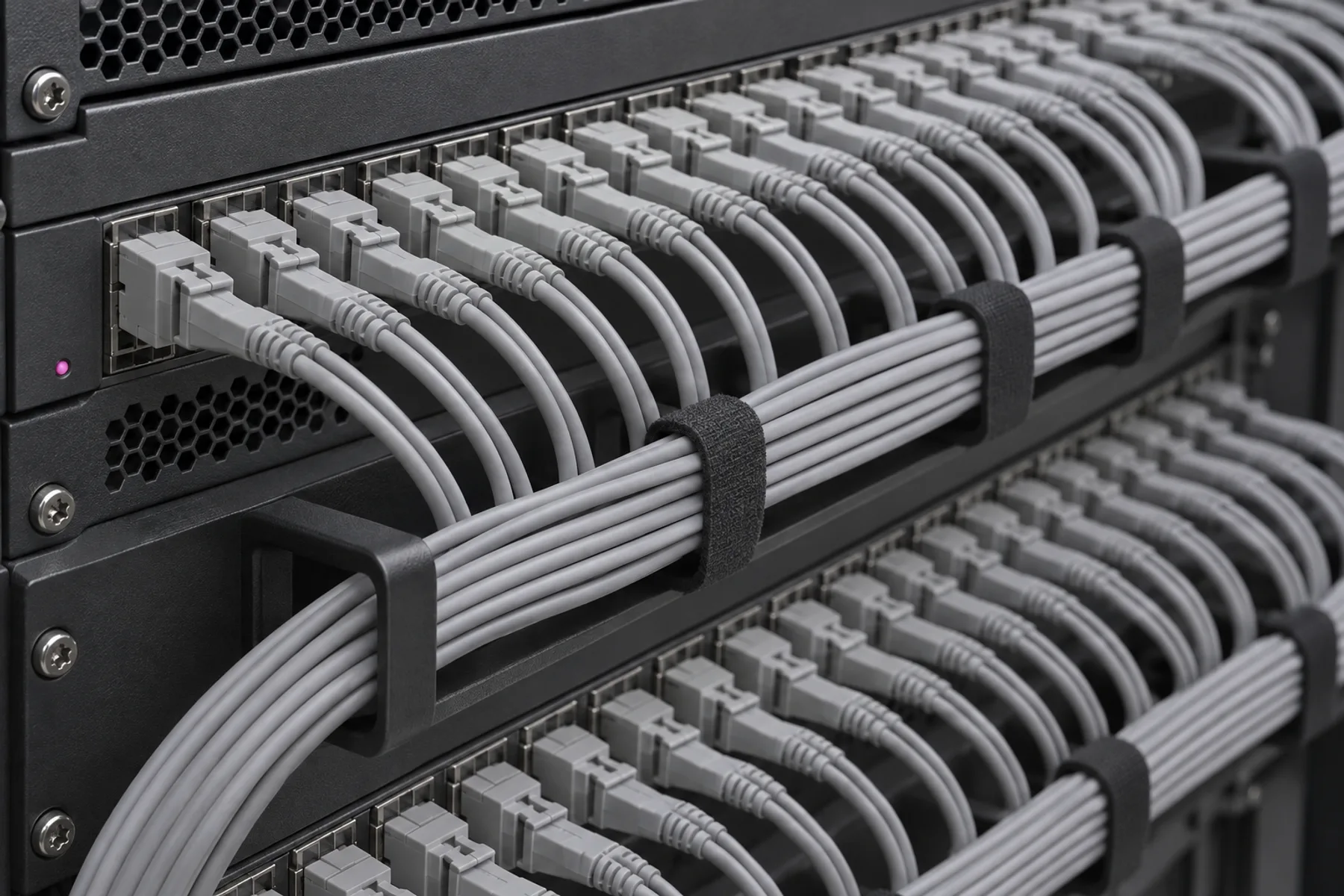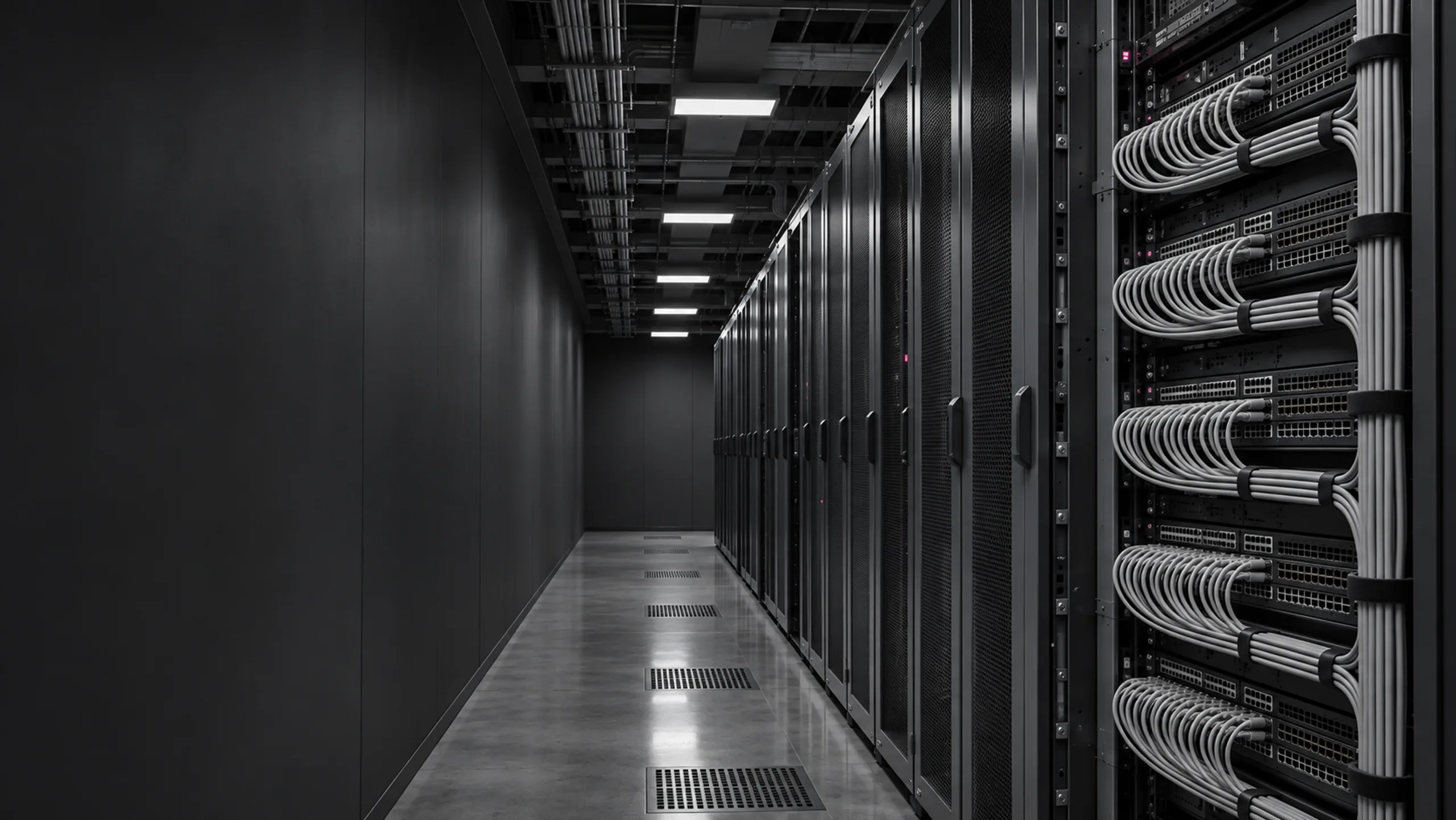
A cool gray data center aisle with neatly organized server cables on the right

Enterprise cloud Start with where it runs

Private cloud, enterprise LLMs and zero trust access. Agree where data lives and who can use it before planning the launch.

Explore the architecture

Cloud infrastructure and AI deployment

Fictional brand concept

Data stays in
the agreed region

Distributed services need explicit data boundaries. Document storage locations, model permissions and recovery conditions before implementation begins.

Illustrative deployment scope

2regions with separate roles
  • Taipei holds source data

    Business data and inference requests stay in the designated region. Each microservice receives its own identity and minimum permissions.

  • Tokyo reserves recovery compute

    Keep a reproducible compute environment ready, with no automatic source-data replication. Cross-region recovery requires prior approval.

The sample token can invoke inference but cannot list or download source data. Actual regions and recovery procedures depend on the project.

One enterprise model request

Illustrative request and response
POST /v1/inference
Content-Type: application/json
{
  "region": "taipei",
  "model": "enterprise-llm",
  "scope": "inference:invoke",
  "replicate_source": false
}

Deployment conditions in the response

Processing region
Taipei
Source-data replication
Disabled
Recovery compute
Tokyo
Cross-region recovery
Manual approval required

API permissions should match the architecture you agreed.

All regions, specifications, APIs, performance figures and service terms on this page are illustrative, not live service offerings.

Three technologies
with a scope you can review

Connect AI with distributed cloud infrastructure. For containers, model calls and data access, define the settings and the deliverables at each layer.

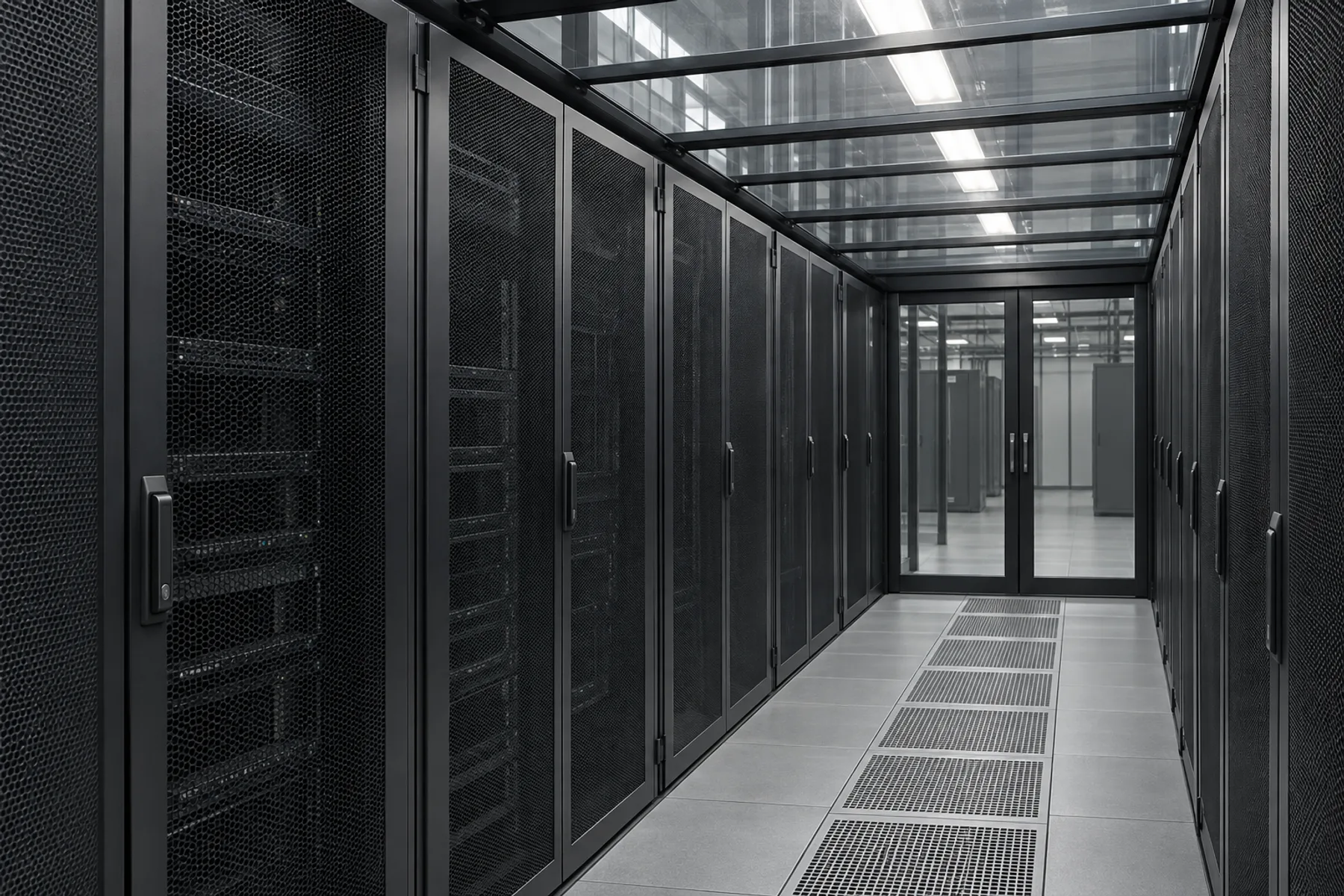
Server cabinets and ventilated raised flooring in a contained cold aisle
Reproducible clusters with clear environment boundaries

Distributed microservices

Use Kubernetes to manage containers. Deploy orders, billing and inference separately, then scale the service that needs capacity without moving the entire system.

Replica configuration
3 → 12
Scaling inputs
CPU, queue length and request latency
Environment boundaries
Separate production, development and test namespaces
Deliverables
Deployment manifests, resource limits and recovery steps

Replica counts are set by workload testing.

Enterprise models and neural networks

Connect enterprise LLMs and predictive models through a consistent API. Define training, versions, input fields and refusal boundaries before release.

POST /v1/models/demand-forecast:predict
{
  "model_version": "1.4",
  "dataset": "approved-sales",
  "region": "taipei"
}
Model tasks
Knowledge retrieval, demand forecasting and anomaly classification
Deliverables
Request examples, evaluation samples and release notes

Models are evaluated against your own data before release.

Abstract architecture sketches on a meeting-room whiteboard
Define model boundaries before product integration
A close view of neatly bundled gray cables and a patch panel
Traceable connections and traceable permissions

Permission scopes for zero trust access

Verify identity on every request, with MFA and least privilege. For end-to-end encryption, real-time threat detection and round-the-clock alerts, agree key ownership, detection coverage and response roles.

Illustrative access matrix
IdentityAllowedRestricted
Applicationinference:invokeNo data export
Data stewarddataset:approveNo model deployment
Operatordeploy:releaseNo source-text access

Delivered with an access matrix, audit records and a key-rotation procedure.

Put the cutover night
into a runbook first

A four-stage migration includes parallel operation. This sample evening cutover defines when to proceed and when to roll back.

4stages in one shared runbook

Deliver the assessment, environment configuration, data checks and launch support. Assign an operator, reviewer and rollback owner before the cutover begins.

The live cutover window is set after rehearsal.

A laptop, paper runbook and coffee on a night-shift work desk
Sample cutover window from 22:00 to 00:30 the next day
01

Architecture assessment

Map data volumes, dependencies and bottlenecks into a migration plan. Agree the write-freeze allowance and how long the old system stays available.

Two weeks before cutover
Record traffic baselines and rehearse rollback
Gate to proceed
Business and engineering approve the window
02

Environment setup

Deploy a high-availability cluster with isolated development and test environments. Rebuild from the same configuration and verify access, backups and alert routing.

One week before cutover
Complete load tests and backup recovery
Gate to proceed
Test environments cannot access production source data
03

Data migration

Migrate and catch up data with automated tools. Compare record counts, checksums and critical transactions, retaining the results as evidence of integrity.

22:00
Freeze writes and apply the final incremental batch
22:30
Compare data and stop the cutover if differences remain
04

Production launch

Move traffic in batches with round-the-clock monitoring and support. Roll back if error rates or latency exceed the agreed limits.

23:00
Start with 10% of traffic, then expand after checks
00:30
Finish review and retain the old environment for 48 hours

Real-time data
from query to result

Use a real-time analytics engine to turn events into reviewable queries. Build dashboards with drag-and-drop tools while retaining each metric’s source and refresh interval.

Order events by minute

Sample query using anonymized event fields only

SELECT
  window_start,
  COUNT(*) AS events,
  AVG(processing_ms) AS avg_ms
FROM order_stream
GROUP BY TUMBLE(event_time, '1' MINUTE);

Connect query output to a dashboard while keeping source transactions under access controls.

Results from the same query

Sample query output
WindowEventsAverage
22:01–22:0260,000,00032 ms
22:02–22:0359,820,00034 ms
22:03–22:0460,120,00031 ms

300%illustrative throughput increase

With 12 workers and 1 KB anonymized events, throughput rises from 250,000 to 1,000,000 events per second.

Excludes cross-region transfer, storage writes and model inference. Validate performance with the actual workload.

Discuss a data solution

Start with data formats and peak volume, then size the cluster

Three industry
deployment scenarios

Fictional retail, contact-center and finance scenarios. Architecture, timing and outcomes are illustrative.

Retail and ecommerce

Four-week plan with a 60-minute cutover

Before
Monolith and shared database, scaled as a whole at peak demand
After
Separate order and inventory services, with data held in Taipei
Illustrative outcome
40% lower operating costs; passed a 100× shopping-event traffic rehearsal
Discuss retail architecture

Contact centers

Three-week plan with a 30-minute cutover

Before
Agents search documents manually, with no separation of model and data permissions
After
Enterprise LLM with a knowledge base, handing low-confidence answers to staff
Illustrative outcome
80% of common questions answered automatically within an approved question set, with human review retained
Discuss enterprise models

Financial services

Ten-week plan with a 90-minute cutover

Before
Shared operations accounts make transaction-data access difficult to attribute
After
Separated private-cloud and on-premises inference permissions, with transaction data kept internally
Illustrative outcome
Zero trust verification and access auditing reduce unauthorized-access risk
Review access boundaries

Service terms
with a version history

Service specifications and research records are updated with each version. Figures below are illustrative.

v1.4

Define availability coverage

99.9% illustrative service availability, calculated monthly and excluding agreed maintenance windows.

Advanced plans can add a 99.99% SLA, with measurement points, exclusions and remedies written into the agreement.

v1.3

Size capacity for request volume

50M+ daily API requests in an illustrative capacity scenario, sized around peak distribution and model usage.

Daily volume alone does not establish peak requests per second.

v1.2

Research and technical filings

120+ patent applications (illustrative), tracked item by item in the research catalog.

v1.1

Support coverage and response terms

24/7 global technical support (illustrative), with a 15-minute response for major incidents.

Initial response is not resolution. Agree severity levels, notification channels and recovery objectives first.

Questions to settle
before implementation

Timing, deployment boundaries and support coverage affect both architecture and cutover. Keep the answers visible for business and engineering teams to review together.

How long does migration take

Illustrative planning ranges are two to four weeks for smaller systems and two to three months for larger migrations. Assess dependencies, data volumes and validation work, including a parallel operation period. Set the final schedule after assessment and rehearsal.

Can AI models run on premises

For sensitive financial or medical data, assess private-cloud and on-premises deployment. If data must remain within the network, include models, logs, backups and update paths in the boundary review, not only the inference host.

How are SLAs and support defined

The 99.99% SLA, 24/7 consultants and 15-minute initial response are sample terms. A real agreement defines scope, measurement, maintenance exclusions, severity and remedies.

Bring your current architecture
to a free first discussion

Start an architecture upgrade with your current systems, data locations and preferred cutover window. Review the deliverables with an architect before deciding the next step.

This booking flow is a demo and sends no data.

A quiet engineering office and orderly workstations at night
Review everything from data location to the launch window

Start with your current architecture

Illustrative free consultation. Begin with these three topics

This is a fictional booking demonstration. No data is sent and no booking is created. [email protected] is a placeholder email.

中文